Stride is a self-hosted alternative to WordPress: a CMS and a visual web builder in one Rust binary, with everything it knows in one SQLite file.
Installing it is one command. Backing it up is copying a file, and it can do that consistently while it runs. There is no PHP to patch, no database server to keep alive and no plugin that can take the rest of the site down with it.
Every operation goes through one register of actions. The HTTP API, the visual editor and a model talking over MCP all do exactly the same things with exactly the same permission checks, so nothing can be done from one side that the others cannot see.
- Language
- Rust
- Storage
- SQLite
- Licence
- BUSL-1.1
- Status
- Pre-1.0
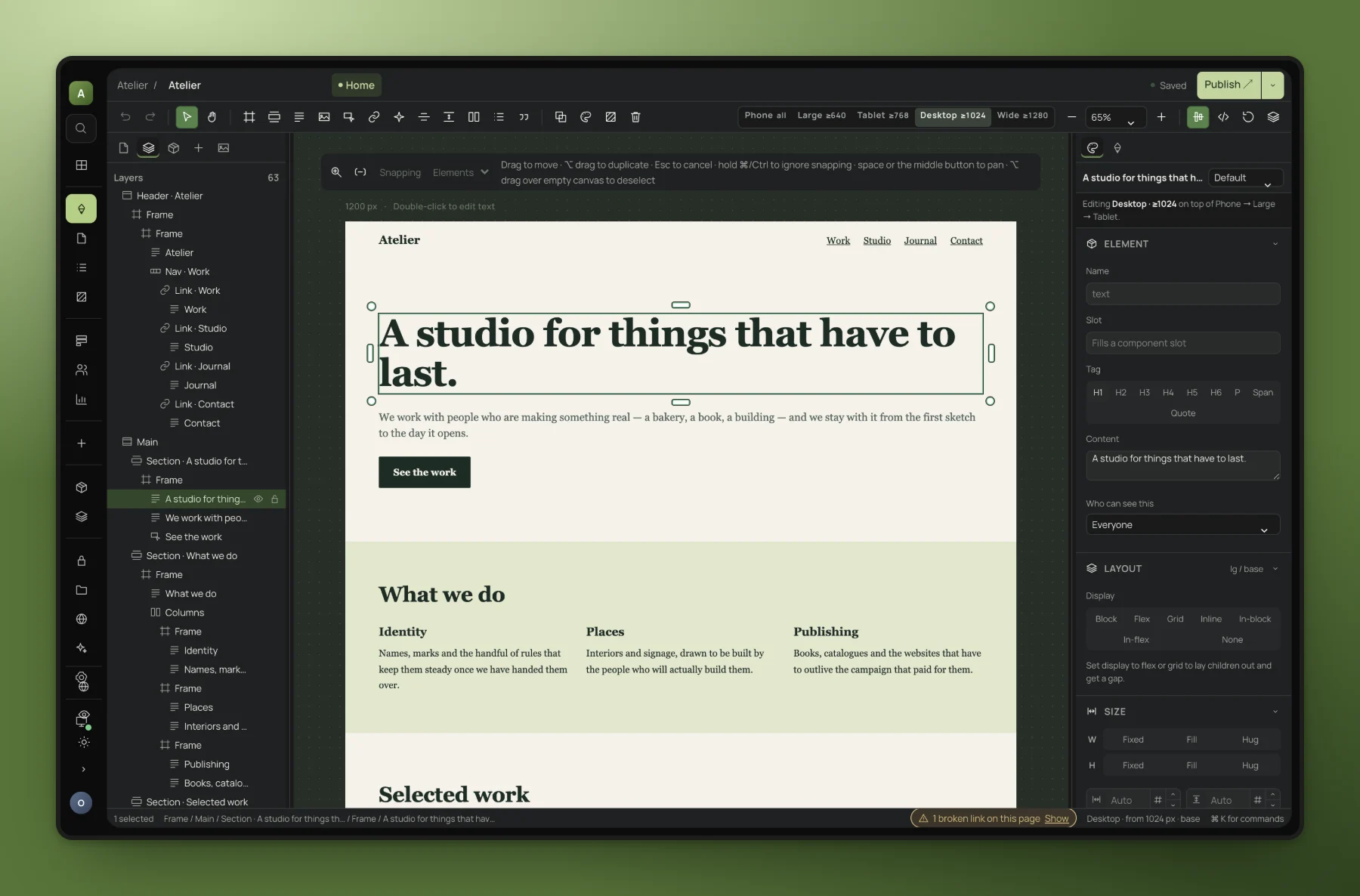
The canvas is real CSS, not a picture of it. Layers on the left, an inspector on the right that works in design tokens, and five breakpoints across the top that each edit on top of the one below.
Components carry variants and slots, animations sit on a timeline, and the code view stays in step with the canvas in both directions. Every page keeps its version history.
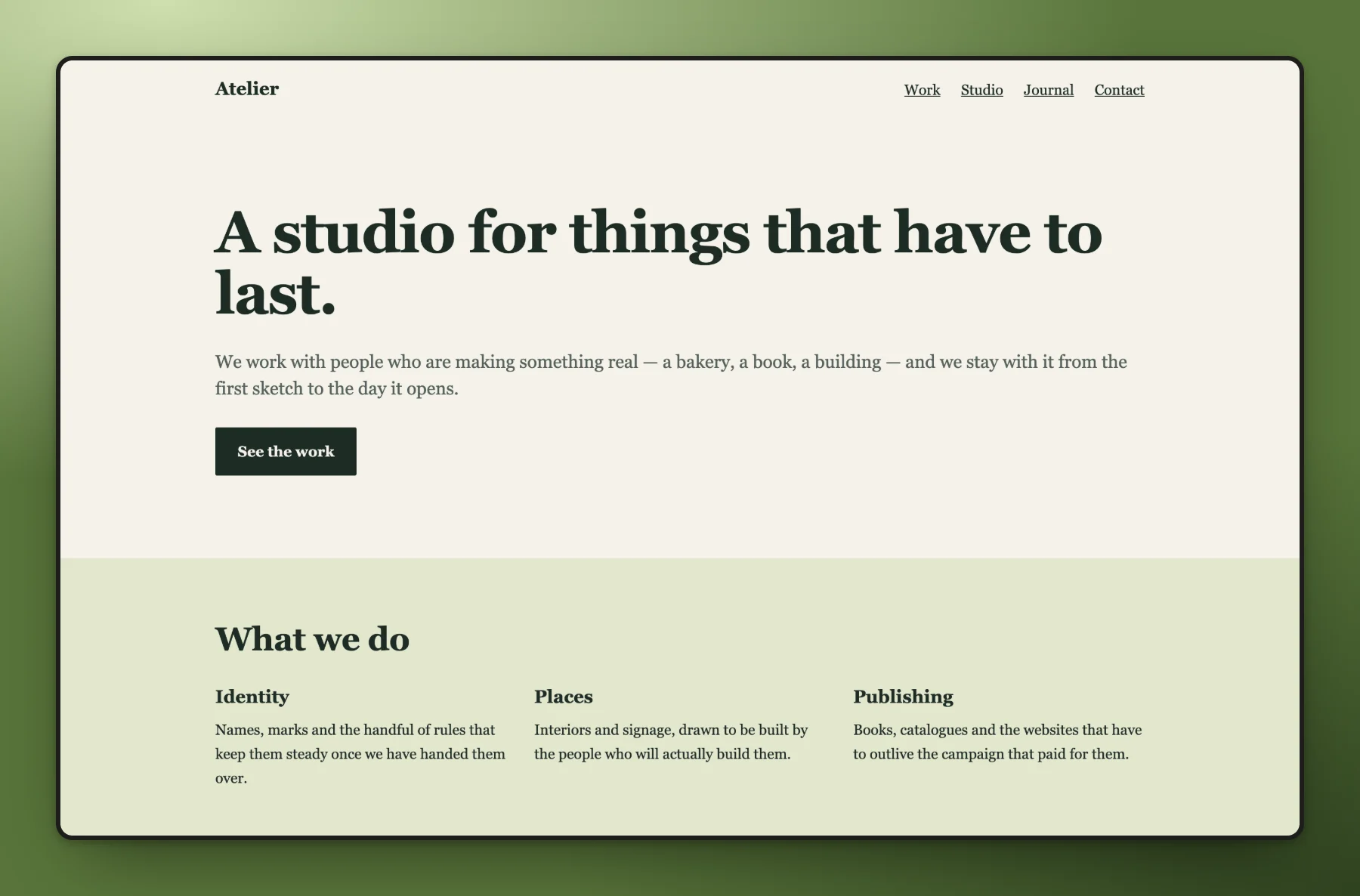
What gets published is HTML and CSS. No framework is shipped to the visitor, no script unless a block actually needs one, and every page is held to a size and Lighthouse budget in CI.
Analytics count on the server, without a cookie or a script. Forms arrive in an inbox with spam filtering and replies. Members can sign in, and content meant for them is left out on the server rather than hidden in the browser.
A webshop is part of the same binary: products with options and stock, a checkout that works without JavaScript, invoices, returns and Dutch and EU VAT, including KOR, reverse charge and OSS. A starter wizard turns three questions into a working shop, blog or information site with its legal pages already in place.
Plugins are sandboxed WebAssembly with explicit permissions, and plugins and themes come from signed registries. An AI assistant can propose changes on your own keys, as a patch to accept or reject. None of it is required.
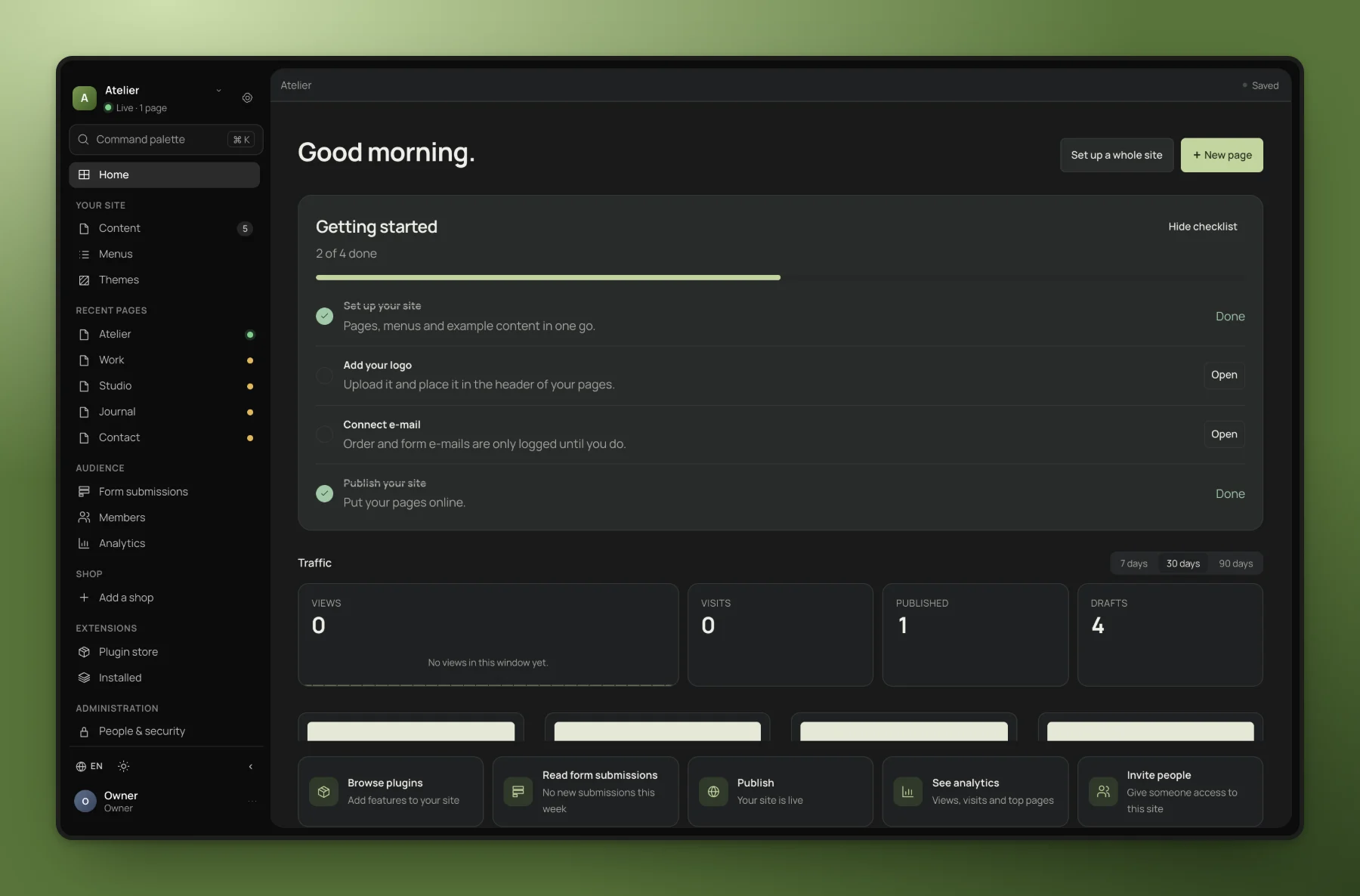
The admin opens on what is left to do, not on a wall of settings. More than one site per installation, roles with a per-action matrix, two-factor sign-in and an audit log sit one step further in.
Stride is pre-1.0 and says so. What has been proven and what has only been built is written down in the roadmap, line by line, rather than left for a customer to find.
Source-available under the Business Source License: free to run, change and use for clients, Apache-2.0 four years after each release.
- Editor
- CMS
- Shop
- Forms
- Members
- Analytics
- Themes
- Plugins
- MCP
- Hosting
