Jet is the deployment console behind the studio's own software. Push to a repository and the project builds, starts and gets its domain, on hardware in the studio rather than on a platform billed by the minute.
It does what a hosting platform does, for one machine and the handful of projects that live on it: builds, domains, certificates, databases, secrets, logs and rollbacks, behind one sign-in with a second factor.
Nemi runs on it, sidecars and all. So does anything else the studio puts online, which is the whole reason it had to be dependable before it could be anything else.
- Since
- 2025
- Updater
- C
- Console
- Bun, React
- Proxy
- Caddy
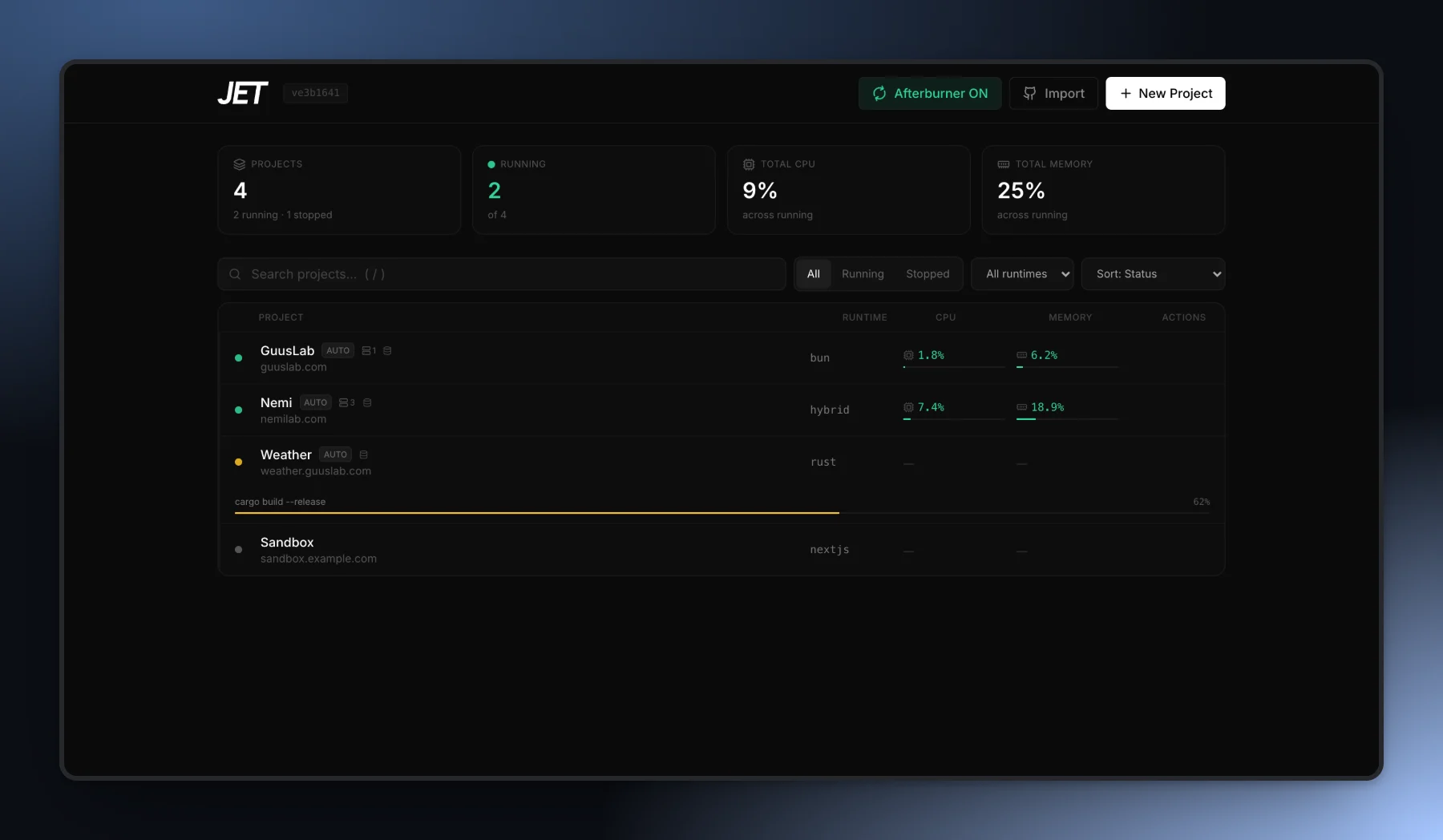
Every project is one row. Status, runtime, the domain it answers on and what it is costing the machine right now, read live from the containers rather than polled into a chart nobody looks at.
A build in progress says what it is doing in plain words and how far along it is. A stopped project stays in the list, greyed, so nothing disappears just because it is switched off.
A deploy is a push to the main branch. GitHub calls a webhook, Jet pulls the commit or the image that CI already built, swaps the container and writes the Caddy route for its domain, certificate included. While it swaps, visitors get an update page rather than an error.
Databases sit outside the project on purpose. SQLite files live in one central folder and are mounted in, and MySQL and Postgres run as sidecars that a deploy of the app never restarts. A git pull cannot overwrite production data, because production data was never in the checkout.
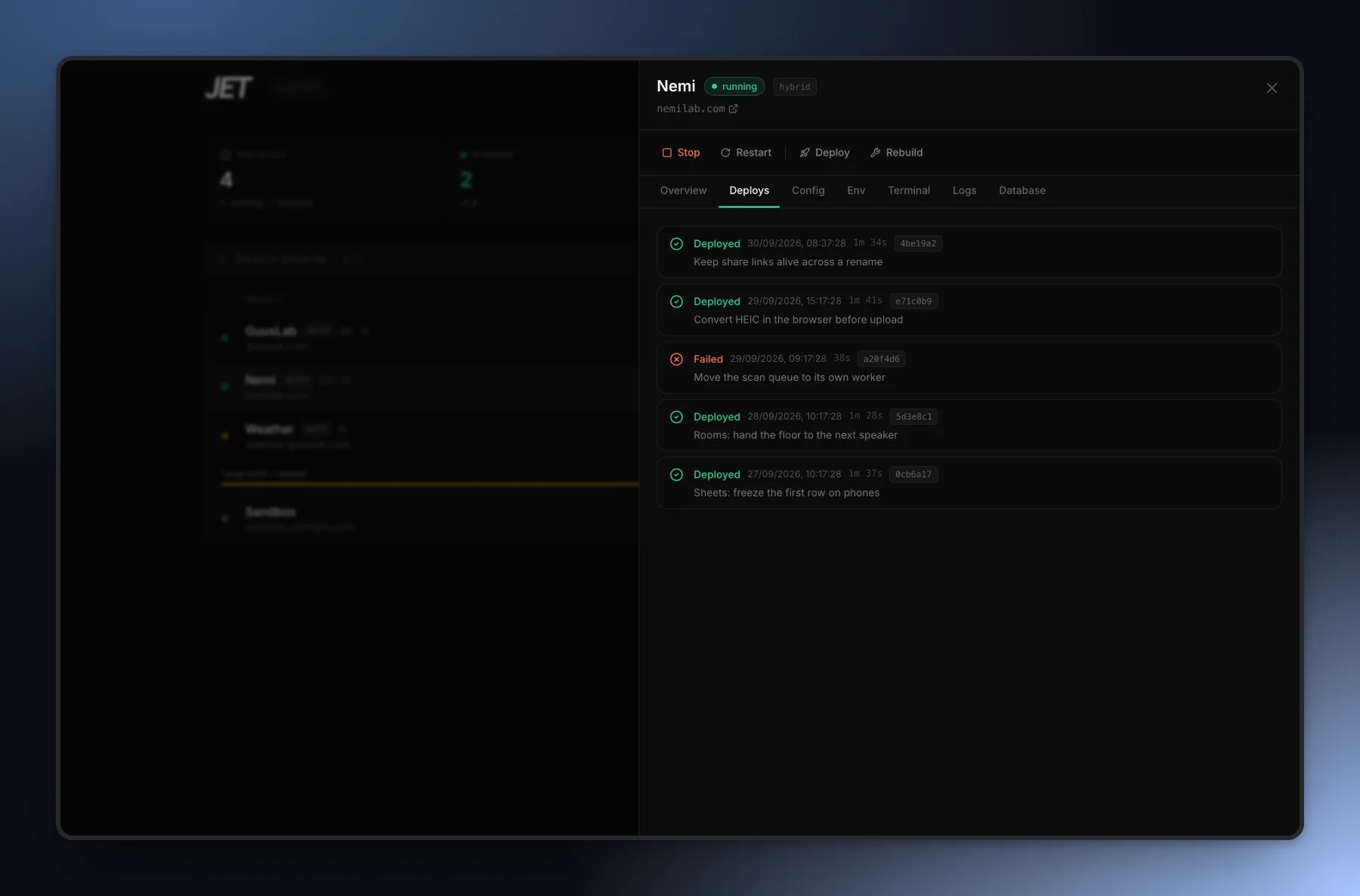
Every deploy keeps its receipt: when it started, how long it took, the commit it shipped and what the commit said. A failure stays in the list with the reason next to it rather than vanishing into a log.
The same panel holds the configuration, the environment, a terminal into the container, its logs and a database browser that can read, edit and back up rows without a separate tool.
Secrets are encrypted at rest and masked on screen. Revealing one asks for the password again.
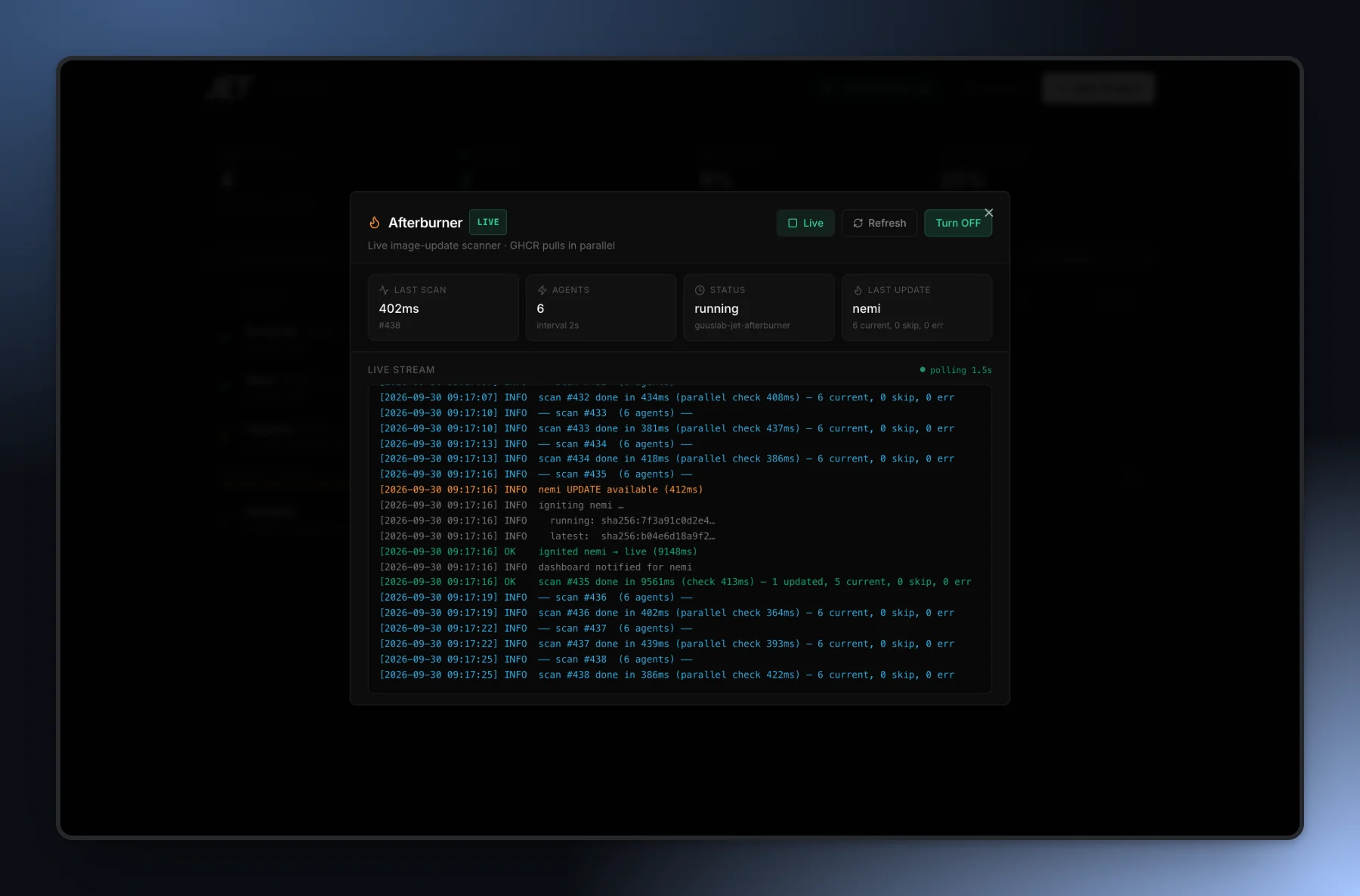
Afterburner replaced Watchtower. It is a small program in C that talks straight to the Docker socket, sends a handful of agents to check every image at once, and does it again every couple of seconds.
When an image changes it recreates that one container, waits for it to settle and tells the console. If the new container dies on boot, the old one goes back, and the history says so.
A separate recovery agent watches Docker itself, so a daemon that hangs is restarted rather than waited on forever.
Nobody visits Jet. It is the part of the studio that is only noticed when it stops working, which is the standard it is built to.
- Deploy on push
- Afterburner
- Domains
- Databases
- Backups
- Rollback
- Secrets
- Logs
- Terminal
